
Eligibility Requirements
- Age: You must be between 15.6 and 18.0 years old
- School Enrolment Status: Enrolled students and graduates are eligible
What's included in your experience
- Airfare
- Airport Pick-up
- Host Family Placement
- Housing
- Meals
- School Placement
- Individual Contact Person
- Medical Insurance
- 24/7 Emergency Support
- School Transport
- Language Instruction
- Assistance with Application Process
- Visa Application Assistance
- Pre-Departure Orientation
- Orientations during your time abroad
- Re-entry Orientation
- Continuous Support
- Worldwide Presence
- 70 Years Experience
What you are responsible for
- Vaccinations
- Field Trips
- Visa and Passport Fees
- Stipend
Host Family & Community
Most Lithuanian families have one or two children. Grandparents usually live in a different household.
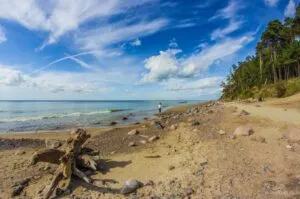
Lithuanians love spending time outdoors. They often refer to themselves as ‘children of nature’, and there’s a good chance your host family will be into outdoor activities like hiking, biking, gardening, collecting mushrooms and berries.
A home in the countryside without any nearby neighbours is a dream for many Lithuanians.

Language
Lithuanian is the official language, and it is expected that you will make an effort to learn the language.
If you feel like impressing your host family and AFS by learning some of the basics before you come to Lithuania, here are some handy resources:
- Ling application: https://ling-app.com/
- Let’s be friends: https://friends.ugdome.lt/
- Lithuania for you: https://www.youtube.com/@LithuaniaForYou

School
Most likely, you will be enrolled in the secondary school that is nearest to your host family’s house. Classes typically start at 8:30am and ends around 3:30pm. Each class lasts for 40 minutes. There is one big break during the day at lunchtime (usually for 30 minutes). The school year starts on the 1st of September and ends at the end of June.
Food
Lithuanian cuisine is generally mild. Potatoes and rye bread are staples, and pork is the favourite meat, followed by beef and chicken. Fish dishes are popular in the coastal regions.
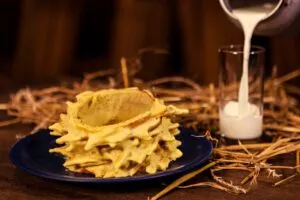
A must-try traditional dish is Cepelinai: Grated potato dumplings filled with minced meat or curd, served with sour cream.
Culture
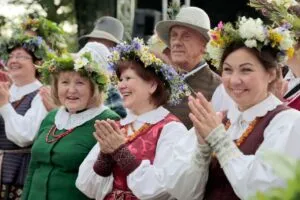
Lithuanian traditions celebrate the country’s Baltic roots, its deep respect for nature and religious influences.
Many celebrations are marked with family and the community and feature traditional songs and dances. Here are a few special days to research:
- Joninės or St. John’s Day
- Kūčios or Christmas Eve Dinner
- Vardadienis or Name days
- Žolynai or herb gatherings
- Coronation of Mindaugas
- Assumption day
Ready to Start your Lithuanian Adventure?
View this profile on Instagram
Let AFS guide your intercultural adventure
With over 75 years of experience in student exchanges, we know what we’re doing when it comes to support and education! AFS provides comprehensive orientation for all students and families before, during and after your exchange – AFS volunteers and staff will be there to support and guide you the whole way through. In-person orientation camps in New Zealand and your host country are supplemented by our world-leading online Student Learning Journey, an interactive course that brings AFSers from around the world together to develop essential global skills, learn intercultural communication techniques, and practice social impact.