


Sounds almost contradictory, right?
But hear me out!
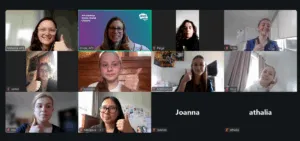
For four weeks, I’ve had the great pleasure of co-facilitating AFS Global Up Teen. It’s a virtual programme designed to do just that: teach tangible intercultural skills and create Active Global Citizens through an online experience.
Here is what happened when a group of NZ high school students from Invercargill to Whangārei opened their laptops to go on a learning journey together.
Week 1: Looking Inward
We started by looking at ourselves.
Most of us think we know who we are. But have we ever really thought about it? Considered all the different parts of us that make up our identity? Properly unpacked what culture is, which culture(s) we belong to, and which we are excluded from?
Watching a bunch of 15-to-17-year-olds think about this was fascinating. Hearing them share their thoughts, their discoveries and their uncertainties was eye-opening. Witnessing them realise that they are so much more than they ever thought was the absolute best!
Week 2: Stepping into Their Shoes
Now that we understood more about our own identity, we were ready to shift our focus to others and how we relate to them.
Stereotypes vs. generalisations, sympathy vs. empathy, suspending judgement, and cultural value dimensions. These are fascinating topics. And quite deep.
I wasn’t sure how far our group of teens would be wiling to engage. But they blew me away. ‘Deep’ doesn’t even begin to describe it. They shared insights that surprised me with their maturity and thoughtfulness. They were genuinely curious to learn, and not afraid to be vulnerable as they shared their own real-life experiences.
Week 3: Confronting the Discomfort
Week 3 hit a lttle differently.
We were more than halfway through, and after the initial high-energy enthusiasm settled, week 3 was quieter.
But that’s okay. Sometimes, when things slow down, it leaves more room for reflection and complex thinking.
Our big topic was inequality, specifically, the gap between those in the mainstream and those in the margins. Once again, I was amazed by the courage of our participants to be vulnerable and say what many of us feel but rarely admit out loud:
“I kind of already know which groups are in the margins … I just usually prefer not to think about it, because it makes me feel uncomfortable.”
When you’re just 17 years old, it takes a lot of guts to admit that to yourself, let alone in front of a group of your peers.
And the best part? There was zero judgement. No “I am not like that!” from anyone. Instead, there was only quiet agreement, head nods, and understanding that we all have that impulse to look away sometime.
Acknowledging it is the first step to real growth and real change.
Week 4: The Ripple Effect
By the end of the final week, it was time to answer the big question: Did our participants become Active Global Citizens?
AFS defines an Active Global Citizen as someone who:
– Enquires critically about the world beyond their immediate environment
– Understands and relates to others across differences
– Values and belongs to a common and diverse world
– Takes action towards collective wellbeing
Instead of giving you my facilitator’s perspective, I think the words of our NZ teens speak entirely for themselves:
“I realised how wrong my first impression can be! Having a really easy tool to help me suspend my judgement is super helpful.”
“Understanding that empathy is not the same as sympathy was a big eye-opener! I am working on being a better listener and showing real empathy to others.”
“Starting with our own identity was the best approach. We’re all so much more complex than what we first see when we meet someone.”
“Now that I understand my own communication and conflict style, I can recognise when someone has a different style and adapt.”
“I assumed I know what concepts like power & privilege, equity & inclusion meant. But now I understand so much more how everything is interconnected and that everything I do impacts others.”
That last statement gets right to the absolute heart if this entire journey. Everything we do affects others. Everything we do has the potential to create a ripple effect far bigger than ourselves.
Being a Global Citizen means understanding that what we put out into world matters. real change starts small, and every one of us can choose to be a force for good.
The Verdict
So, can you become a Global Citizen without leaving home?
Absolutely, yes!
You don’t need a boarding pass to expand your world. You just need the willingness to look in the mirror, look out the window, and step courageously into the conversation.
Find out more about our suite of Global Up programmes (for teens and educators) and how you can take part: Virtual Exchange and Education Programmes