

We continue our series of memories from the 1960s with Hilary Roots and Trish Hall. Imagine seeing Dr Martin Luther King speak live and in-person. And imagine winning your one phone call home to NZ in a radio competition! Enjoy reading these fantastic stories:
Hilary Roots (USA 1963-64)
Looking back more than 60 years, our experiences reflect the way our world has changed. Our group, some 60 from throughout NZ, destined only for the States, flew from Auckland when there was no direct flight NZ-USA. The national carrier then was TEAL. Our path was Auckland-Sydney (red rooves) to Hawaii (tasting pineapple at four in the morning), and San Francisco (meals on platters and the magnificence of the Stanford University Campus) for Orientation.
Three days later I flew to New York City, was met by my host family, drove three hours to Schenectady, upstate New York, and woke up at three o’clock the next afternoon in of course, unfamiliar surroundings that were to become home to me for the next year. A home so tightly-knit, so warm and generous (four new siblings for me) that they adopted me till this day.
The family was Croatian, when Croatia was still behind ‘The Iron Curtain’. My high school, across the road, enrolled 1,800 students. I came from Carterton in the Wairarapa – 3,000 inhabitants. Schenectady, the home then of General Electric, had a population of 80,000. My background was Anglo-Irish. Schenectady was predominantly German, Italian, Jewish and Scandinavian – all American on the surface, yet at home, many holding alive their diverse heritage, food and holidays.
A new world opened to me. The AFS motto “Walk together, talk together all you people of the earth. Then and only then shall you have peace”, became a reality to which I still adhere. Links back home to NZ were by letter and one phone call to my family for Christmas, which I won in a radio contest.
A high school course there in Ideology in World Affairs led to my studies in Political Science (Victoria and Canterbury) and my becoming a news and current affairs broadcasting journalist in Christchurch, Perth and Sydney. Three lines in a Saturday ‘Australian’ in 1975 took me to a dreamily-beautiful island, Isle of Pines, in French New Caledonia, for ostensibly five days. Fate intervened and I stayed 49 years. Needless to say, my last employer in Sydney, Channel Ten News, was most disappointed that their only female A-grader should step off the ladder into an unknown world of no money, not speaking the language and barely knowing a new-found partner, a Swiss-German scuba-diver and graphic designer.
The AFS ideals however, were never far from my mind, and came into play again when I went back to studies at Sydney University, graduating again aged 66, with a Master’s in Peace and Conflict Studies. Ah, to be idealistic. Alas, my newly-learnt skills were not consulted and New Caledonia erupted in social and political upheaval mid-2024.
Again, there was a touch of AFS still with me: my youngest ‘brother’, seven in 1963, was staying with me at the time. Now a gentle grandfather and retired flight-systems analyst, the NZ Government kindly offered to evacuate us from Noumea to Auckland, in a 60-year-old Hercules.
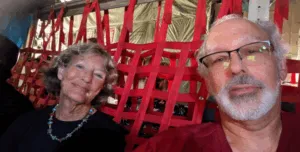
While I wasn’t threatened myself, nevertheless, the closure of hotels and transport to the island, rendered the foreseeable isolation un-liveable for me. With two bags, I made my way to Australia and have settled in Noosa on the Sunshine Coast.
Trish Hall (USA 1967-68)
Gisborne, New Zealand to Cleveland, Ohio was a giant step for a 17- year-old who hadn’t finished her final year at Gisborne Girls High. Up till then, I’d been out of Tairāwhiti as far as Rotorua, and once to Wellington.
I was super appreciative of my East Cleveland AFS family of 5 daughters (2 were living at home) and my active, generous, encouraging parents. We lived in a typical inner-city two storied house on the wrong side of the tracks. Our neighbourhood was rapidly changing as African American families moved in from the inner city.
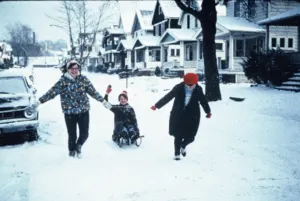
It was at Shaw High School that I most starkly experienced this rapid social, cultural and community change. When I started my high school year our student population was approximately seventy percent white and thirty percent African Americans and Hispanic. By school graduation one year later, white flight out to wealthier suburbs and the influx of new African American communities meant those percentages were virtually reversed.
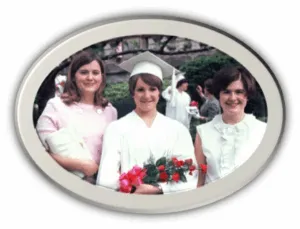
I was fascinated to witness the ‘soul’ black cultural renaissance amongst my classmates. They walked, talked, danced and dressed in ways influenced by black political leaders, and their favourite television programme: Soul Train. I even surreptitiously tried the dance moves at school balls!
But that was not all that was happening in 67/68. The Vietnam war was at its peak and beginning to turn against the US and towards the ultimate victory for North Vietnam. America’s high casualties were reported constantly. Anti-war demonstrations were rising, male students talked of being drafted once they left school.
Our American History teacher made his stance powerfully clear. Most days as he began class he would quietly point to one of us and say: where you are sitting today, last year Leroy sat there. We have heard that he has been killed in Vietnam this week. And then he would calmly pause to honour the ex-student of the day, before moving on to teaching his class with passion.
My school days were dominated by many extra-curricular commitments:
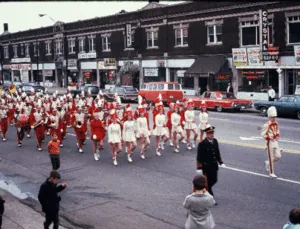
I was a member of the Shaw High Cardinals marching band, leading the school football and basketball teams into their weekly matches. Classy red and white uniforms and heaps of fun. I couldn’t read music so they assigned me the percussion Glockenspiel but asked me to fake playing it, particularly on wintry, still nights when its clear, high-pitched notes were naturally amplified!
I was in the dance chorus of the school musical production: South Pacific. I tried to influence the directors and actors to make it more authentically depicting the South Pacific, but that was a lost cause!
I had more success with the cheerleaders. I suggested that together we create a simple long poi routine for the cheerleaders, with me doing a more complicated double long poi in the centre. (I had been a keen member of our Gisborne Girls’ kapa haka club). I had the waiata recorded and showed the cheerleaders how to make their poi. We innovated by projecting white light onto our performance. So, at half time in the basketball match the lights went off in the stadium and on we came to do the poi! With an American twist!
I was a member of our high school chapter of the NAACP (the National Association of the Advancement of Coloured People – the oldest, largest civil rights organisation.) Each week a group of us drove from school in a long Chevrolet, into the inner-city ghetto of Hough, to a community centre where we read to and played with neighbourhood kids. Through this volunteering we were invited to a meeting in December ‘67 where Martin Luther King spoke to the adult association, in his vivid charismatic style. Four months later (April 68) he was assassinated.
My AFS family took me to famous Virginian parks, to Washington, and historic southern sites. It was on one of these trips to the southern states that we heard the news of King’s assassination – and had to bypass cities where rioting had erupted. It was on that same Easter holiday that I heard on the car radio the only New Zealand news all year – the Wahine disaster.
After the superb AFS bus trip across America for the final month, I returned to Gisborne. The re-entry was hard, but I was wiser about so many aspects of myself, and the world. For my Gisborne Girls’ High 1968 yearbook I summarised: “My powers of tolerance and adaptability were strengthened with every new experience. As I continually met new friends, I became fascinated with people. I learnt to live every moment to its fullest, for the more I gave of myself the more I gained … it was a year of my life but an experience of a lifetime.”
It is not surprising that in my undergraduate study I majored in Anthropology and Education. Then I did an MA in Social Work and Community Development and was a community development worker in Mt Victoria Wellington, before heading to the UK to work in some fascinating London neighbourhoods. Then for a decade I taught social change and community development at Victoria University, before moving on to co-own our small women’s consultancy, Tall Poppies. We specialised in organisational change, and leadership, strategic thinking and partnership brokering between organisations. I’m now a global mentor and examiner of practitioners who specialise in partnering effectiveness.
My AFS experiences had greatest impact on bringing up our two kids. Our daughter, Nina, picked up on my AFS stories and created her own with a family and community in small town Sicily. Our son, Ralph, embraced being a host sibling of two AFSers we claim as part of our family: an Argentinian son, and an Austrian daughter. We are still connecting with our AFSers, and two years ago we were all at our Austrian daughter’s wedding in the Austrian lake district.
Note: Trish, through her company ‘Tall Poppies’, worked alongside the AFS NZ Board investigating organisational change and strategic thinking. Thank you for your contribution, Trish!
Ted Hansen (USA 1963-64)
In July 1963 I was off to San Francisco where I had four days of orientation at Stanford University. From there it was onwards to Oklahoma City and an outstanding year with a great family and a High School which had 2600 students.
I do remember when we were on the end of year bus trip around the States our first stop was Memphis. A neighbour of my first host family was the guard at Elvis Presley’s home, Graceland, and he let us in to get a photo. Imagine knocking on Elvis’s front door. He was even home that day although the guard didn’t think he was!

I still keep in touch with some students from my school and I went back for the 50th reunion of graduation. That exchange year was very much part of the foundation of my life. My wife Denise was a Rotary scholar in Cooperstown New York. We met as 18/19 year olds.
The second year we were married we moved to Matamata and brothers from both our host families came and lived in Matamata and taught at Matamata College. They both had kiwi children and one has lived and worked in Wellington for the past twenty years.
My AFS year gave me a good base for getting to grips with new work experiences. I started as a civil engineering graduate in Hamilton in 1969, then had time in Matamata, Rotorua, Westport, and Rotorua again before becoming the CEO of Rotorua District Council with 500 staff for almost 16 years.
I went on to become Rotorua Chapter President for five years in the mid 80s for five years until 1991. During my time as President, I remember we hosted a group of students from the USA for three months. They spent time in Rotorua and at the Outdoor Pursuits Centre near Turangi on an Intensive Programme involving OPC. We hosted Todd Barker from Kansas City and we’ve kept in close touch with him and his family ever since.
All three of our children have, after graduating from university, spent time overseas with their partners getting that world perspective that is so important for kiwis. Our eldest grandchild has worked in Berlin for the last seven years. Since retiring we have travelled lots all over the world and so much of our life has flowed from our very early overseas exchange experience.
Helen Marieskind (USA 1962-63)
When I told my parents I wanted to try for an AFS year away, they said I could choose between being a debutante or AFS, but I couldn’t have both. There was no question and I have no regrets!
From 1962-63, I was an AFS student in Mamaroneck, New York, part of the Larchmont, Mamaroneck, Rye cluster of small towns in Westchester County, just north of New York City. These three townships opened on to Long Island Sound and in !962, Mamaroneck was the largest small boat harbour in the USA. It was an area of contrasts–substantial wealth as a dormitory town for New York City executives but with a growing working class population who were moving out of New York City and its environs. Mamaroneck had two high schools and my host school was Rye Neck High, located in the more affluent area. I was very lucky to be included in the wide range of activities, interests and opportunities that families in this area could afford.

At school, I played field hockey, violin in the school orchestra, sang in the school choir, was a member of the Seniors’ debate team, in the Seniors’ school play, went on several trips to visit colleges my school mates were considering and generally said yes to every invitation. It was in that spirit that I also said yes when a star student athlete invited me to join a group of classmates going to the movies. Remember that this is 1962, John Kennedy was President and civil rights were a-stirring.
My host family were extremely uncomfortable as the student was African-American and had a reputation. In the AFS spirit of peace and understanding, I saw no reason not to go, but ultimately did not. Unbeknownst to me, my AFS family had involved both the AFS office in New York and my New Zealand parents in this matter. A few weeks later when I was on an AFS-sponsored visit to Washington, DC and Colonial Williamsburg, I was asked by my AFS contact if I were happy and would I like to spend a couple of days in New York at the head office. I said yes. I learned that a new host family had been arranged for me and my belongings already had been moved.
Ironically, that was the weekend that Bobby Zimmerman, later known as Bob Dylan, came with his AFS friend from Japan to sing Its Blowing in the Wind to Stephen Galatti and Bobby invited me to go to the movies with him and his friends. He wasn’t famous then so it took me a few years to wake up.

My new family had hosted AFS students before and were active in the community and our friendship continued for decades, with my children knowing them as Granny and Grandad.
I returned to New Zealand, attended the University of Canterbury, but married an American before I completed my degree. He worked for a large multi-national and we were assigned to live in Portugal, where our first child was born. It was the era of Salazar in Portugal and Franco in Spain. I loved living in Portugal and was sad when we left. I was also beginning to wonder, as a mother of two children, what I was going to do with my life. After another corporate move we ended up in Los Angeles.
One day I woke up and signed up for classes at the University of California at Los Angeles (UCLA). I was able to transfer all my credits. The early seventies was an exciting time to be in a college environment: the anti-Vietnam War protests, the Women’s Movement and the Farmworkers’ Movement were all around me and I embraced it all. I also looked around and saw people going for graduate degrees and thought, I can do that, too. And so I did, completing my Doctor of Public Health degree in 1977.
My first job in the USA was as an Assistant Professor of Community Health at the State University of New York, College of Old Westbury. It was a hotbed of radical thinking on healthcare and I soon became involve in the Women ‘s Health Movement in the USA, organizing a national conference on women’s health issues, founding the first academic journal on the topic and completing a very large study for the USA federal government on the caesarean section rate in the USA. I spoke at many conferences, including here in New Zealand in 1977. Other positions I have held include directing the End Stage Renal Disease program for the states of Alaska, Idaho, Montana, Oregon and Washington and directing a large non-profit organization serving blind and visually impaired persons—we had a staff of 35 and 1200 volunteers. I was selected to manage a project to develop a weight scale for UNICEF and travelled the world with its Australian inventor, working with governmental agencies in many developing countries. I also sold condoms for two companies to health departments worldwide and have heard every condom joke in the book, I promise you—please don’t try. I have worked, too, for the USA Federal government in emergency management, in the Office of Juvenile Justice and Delinquency Prevention, for the Presidential Campaigns of John Kerry and Joseph Biden, for the Chicago Children’s Museum and managed a very large Gates Foundation grant to help farmworker children in Washington State get learning-ready for
school.

Most recently, I volunteered for New Zealand’s Volunteer Service Abroad (VSA) program and was just six weeks into what I had hoped would be a two year assignment in Kiribati, when Covid hit. I was evacuated, came back to New Zealand. I now live in Waipu with a glorious view, two dogs and six sheep, two of whom appear to be pregnant. Hope springs eternal!
Roger Gaskell (USA 1963-64)
It’s no exaggeration to say that my AFS placement was an eye opener: it changed the direction my life would take.
I had asked to go to California, and AFS sent me to Needles. No, I’d never heard of it either. Remember this was the 1960s, long before the internet and Google, and it was not easy to find information about my new temporary home. Needles sits on the banks of the Colorado River, near California’s border with Nevada and Arizona, about 350 kilometres east of Los Angeles. Needles is the first California stop on Route 66 going west. It’s in the middle of the lunar landscape of the Mojave Desert, with rain on only one or two days each year, and temperatures for much of the year above 38°C and nearer 50°C in the hottest months. There’s a population of about 5,000. Needles was and is a railroad town, and many people depend on the trains for work.
Needles is multi-ethnic. More than a quarter of the population are Hispanic or Latino, and nearly 40% are non-white. That was the first eye opener for a Pākehā kid from the essentially monocultural Christchurch of the 1960s.
Then I discovered that, like most US towns at that time, the coloured people lived on one side of the railroad while the white people had
their houses on the hill looking down on the tracks. One wonders how much has changed.
I soon warmed to the diversity of Needles, easily making friends with Mexican students, and still have fond memories of the genuine Mexican food to be had at Mrs Valenzuela’s home-based restaurant. I quickly learnt to avoid her mouth-crippling chillis.
The river, where we swam most weeks, gave some relief from the heat. But it was an adjustment that had to be made. I still remember walking home uphill from Needles Union High School each day, 20 minutes in 40° temperatures in the “school uniform” of jeans and white t-shirts with a bag full of books.
My temporary home also offered challenges. My AFS Dad was the High School principal. That situation could have caused difficulties. But he was a busy man who, in addition to running the school and his family responsibilities, was completing a PhD. That opened my eyes to the opportunities offered by further education, and persuaded me to study for a BA in Economics at Canterbury University on returning to New Zealand. This was a life-changing decision that led me to a career in banking and finance. None of my own family had been to university and, before the AFS experience, my ambitions had been set lower.
School life in Needles centred on football, baseball and basketball. I took up track with some success and continued my long-term passion for swimming.
One event above all, left an indelible memory. At 11am on 22 November 1963, classes were stopped with the news that President Kennedy had been assassinated. Many of the students burst into tears in disbelief and the school was closed. Normal railroad operations also stopped while trains full of military equipment got priority on their way to Dallas, at the same time as Air Force jets filled the skies. It was a time of extraordinary uncertainty for America and Americans, culminating the following Sunday with the shooting of Lee Harvey Oswald by Jack Ruby on live television.
My connections with AFS continued after I came back to New Zealand. My US brother spent a year with my family in Christchurch and my own brother spent several months with my Needles family. Later, my US parents visited New Zealand.
My direct AFS involvement also continued. I was National Treasurer for a year and later Chair of the AFS Educational Trust for seven years.
The class I was in at Needles Union High School held a 30th reunion in 1994, which I was able to attend, and I have made many visits since, staying with various families. I still get a regular email newsletter from our class president.
My AFS family goes wider than Needles. In those years we ended with a month-long bus trip from Los Angeles to New York City and Washington DC, during which I formed a close friendship with a student from Argentina. Since then, Marcello and I have visited each other frequently and taken part in various family events. We still exchange phone calls and emails frequently.
AFS has been a life changer and a very rewarding experience.
(Note from Raylene Sommerville: Roger’s leadership of the AFS NZ Educational Trust for seven years was significant, and for that and other volunteer roles he contributed to AFS NZ, we have much to thank him for.)
Erica Whyte (USA 1962-63)
I was about 12 when returnee Nicolette McKenzie spoke to her old school, Solway College, Masterton, of her AFS year. My imagination was captured; my goal established. I wanted to follow in her footsteps. And what a life-shaping year it was and still is. (There are boxes of memorabilia still tucked away in corners of the house.)
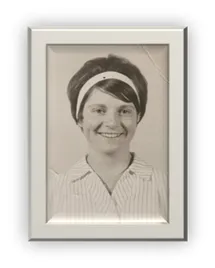
These mementoes confirm the long- lasting appreciation I have of the warm welcome the AFS family gave at all levels from thriving, well-organised branches/chapters to the many families who welcomed us for year-long stays (the only option in 1962) or short stopovers when on the ‘amazing’ end-of-year bus trip. This included that memorable visit to the White House and the unbelievable experience of mingling on the front lawn with President Kennedy only an arm’s length away. Today security issues would not allow this.
Our flight to San Francisco in 1962 created enough excitement but circumstances dictated even more. It was one for AFS organisers to sort. Some mechanical problems arose in the plane, (remembered by me as there was no air conditioning but there was the occasional lump of ice hurtling around the cabin.) The flight was re-directed to Hawaii where, so my story recalls, only the Hilton could put us all up for the night at such short notice. I will reluctantly accept correcting if we really weren’t somewhere so impressive! On to San Francisco and to our waiting families. Mine, the wonderful Lindert family in Milwaukee. There is neither time nor space to wander through the many memories that are beginning to break through now that I’m ‘off the ground’ with remembering.
All returnees will be able to recall the challenge of fitting into a new family, (mine a family of 4 children with one away at college, but still a great leap from being raised almost as an only child since my brother was nearly 5 years older, and at boarding school.) My new school was a great contrast from my Kiwi school roll of 180 to USA of around 1,000. One key difference was no wearing of uniforms. Another was
from ‘girls only’ to co-ed. And a bonus – I am delighted to have one of my Milwaukee high school friends living in NZ.
Until recently I have been able to keep in contact with my family, in particular my sister Ann and my Mom and Dad. They are no longer alive but I remain in touch with my younger brother Tom and with Ann’s daughter. I have been able to return to Milwaukee on a number of occasions.
My brief in writing this asks me to explore the influence of the AFS experience on outcomes throughout my life. Being able to maintain contact with the Linderts led me to define my world on a broader scale than NZ could supply. It contributed to my ongoing volunteering, not just in AFS but in many local organisations, enabling me to give back to my country and gain a respect and appreciation of NZ life. It fostered an interest in the world at large, possibly leading to a degree including geography studies.
I had grown up planning to be a teacher. My American schooling added to that expectation by exposing me to a wide range of teaching methods compared to the more formal teaching of home. I recall what I see as a compliment to the AFS experience, that on my return and before I had begun my teacher training, I received a call from a local high school principal offering me a job when I graduated – 4 years
away! He was confident that the AFS year meant I would become the teacher he wanted in his school.
AFS gave me a chance to gain confidence in public speaking, to be proud of my country, to be more of a risk-taker than I might otherwise have been. At the end of our year, I was chosen from amongst the school’s group of foreign students (5 of us) to give the final vote of thanks for being hosted at Whitefish Bay – a full auditorium. Fortunately, the lights took away the awesome sight of the crowd and I spoke with all the passion of a 17 year old leaving her loved ‘second world’. Many tears.
Two AFS memories stand out as I consider those years. On my return to Wellington, I was immersed in AFS Chapter activities and had a great opportunity to network with people. During my time as Chairperson of the National Executive (now Board), I was able to represent NZ at a number of overseas conferences. These were years of re-shaping AFS from its original American direction to the international focus that was rapidly emerging. Perhaps the greatest satisfaction came from leading pre-departure orientations which gave me truly hands-on involvement contributing positively to the students’ experiences.
At this time the ambition to make the AFS experience available to those less well-off emerged and thus the AFS Educational Trust was signed into being in 1976. This was a great team effort as we explored the legal and financial requirements for establishing this Trust.
In 1979 I was made a Life Member. Sadly, due to changes in my life I was less involved in the life of my local Chapter. The skills acquired through those years equipped me for an unexpected change of occupation. In 1985 my husband and I bought a Mitre 10 store in Whangarei. Volunteer time and energy became harder to find for the Northland Chapter. So now, in my eighties, I rely on the memories of some special AFS people and events:
– Tungia Baker, National Representative when I was first involved, was a great encouragement
– Peter Boshier and Eton Brandon spearheading and up-dating the constitution of AFS NZ were tireless and creative in their contribution. Peter remarked that we were helping to reshape the destiny of AFS in NZ, to define its national organisation. And, I might add, reshape the destiny of my life.
– Warwick Gendall and his leadership in establishing the Educational Trust Fund.
– The shock of President Kennedy’s death was more profound as we AFSers had met with him on the White House lawn only a few months earlier.
– From the American way I was encouraged to seek answers to questions of race, religion, freedom and democracy.
I lived amongst people who were generous and kind and living according to the AFS philosophy. It was a privilege to be present when Stephen Galatti and later, Stephen Rhinesmith were building AFS.
My hope continues that through AFS people of all nations will continue to seek the walking/talking experience so that peace has a chance to prevail in all countries.
(Note from Raylene Sommerville: Erica talks about being made a Life Member. She was just the second person in AFS NZ to be awarded this honour and this didn’t change until after 1997. She gave so much as a volunteer locally, nationally and internationally. It was stated: “In 1979, on her resignation from the National Executive (Board), it was unanimously decided to grant Life Membership to Erica for her untiring efforts to promote all aspects of AFS in NZ and overseas”. Thank you, Erica.)
Dame Diana Crossan, DNZM (USA 1967-68)
(Dame Diana has had an outstanding career as a prominent New Zealand public servant, company director, and social advocate. She is widely recognized for her transformative work in expanding Equal Employment Opportunities as its founding Manager, served as the Retirement Commissioner for ten years, and has been actively involved in the charitable sector, focusing on social justice, refugee support and poverty. An AFSer who has contributed significantly to her country.)
I wish I could produce sound in this article because my overwhelming first memory is the ‘Andy Griffith’ accent of my new community in Roxboro, North Carolina. Everything was “right nice and right prurdy”. All women were called “May’am”.
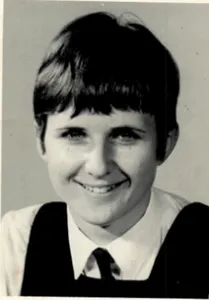
I was warmly welcomed into the family, and the school and church communities in 1967. It was not long after the Watts riots and the Vietnam war, both of which had affected or were about to affect every community in the USA.
Along with the accents, the attitude of the people I mixed with towards African Americans was so embedded it was part of everyday life in our small town, and different to anything I had experienced.
In my first few days with the Pattersons, I was taken by my American sister to visit some neighbours. One man, a dentist, greeted me with “New Zealand – social dentistry – let me have a look”. I quickly swallowed the piece of cake I was eating and was pleased to hear him say – “not bad!” Of course, they had nothing like the dental nurse network we grew up with.
At school I took public speaking as a regular class. One of our first assignments was to read a piece to the class – I guess to see how we were projecting our voices. When I finished the teacher (who, by the way, was also the Latin teacher), asked a student to go and get the AFS liaison teacher. I was the first AFS student in this town. The teacher arrived and I was asked to read my piece again, then was asked by the public-speaking teacher how long had I been learning English! Later I won a speech competition but was not sent to the State Finals because they were concerned the judges there would not understand my accent. So, they sent the runner up!
Sport was a big part of my life in Pleasant Point, South Canterbury. In North Carolina sport was for boys. Girls were cheer leaders. However girls were encouraged to do exercise, and we did play a kind of basketball with six players as a part of our gym class. I did find a guy who wanted to play tennis. I am not the best tennis player, but I like it and still play. When I came home from the game (we played on a private court) my American mother was disappointed that I had beaten the guy and said that on another date I should let the guy win! I didn’t realise it was a date!
While I was with my family, they or their friends took me to all parts of the state, and to some historical sites in Virginia. Then there was the AFS bus trip at the end of our year which I really enjoyed and still remember with fondness.
While I have not kept close contact with the family, I have visited them over the years. My Kiwi aunt said she was royally treated by the family and friends when she visited a few years later.
Then later when I was studying in Swansea, UK one of my Kiwi sisters and her husband, who were doing their OE in London, were invited with me by the Patterssons for Christmas. What a memorable visit, including a trip to Washington and a tour of the White House – pre the proposed Ball room!
My most recent visit was with a kiwi friend who worked at the World Bank in Washington and kindly took me on a road trip to North Carolina to visit my American sister, Kathy and her husband. We connected immediately, and my friend was fascinated to hear all the stories.
AFS changed my life as I am sure it did for everyone who was lucky enough to enjoy the experience. It strengthened some of my values, developed my confidence – I hope without losing my humility – a strong lesson from my Kiwi Mum. I learnt a lot about different cultures which taught me to try to see all sides.
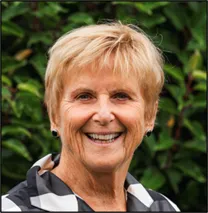
Reflecting now I believe my AFS year led to my openness to variety in my career – probation officer, policy manager, managing the Clyde/Roxburgh dams, senior manager in AMP and the CE of Wellington Free Ambulance. And to cap it all off in 2019, I was awarded a Damehood for my work in Equal Employment Opportunities, as the Retirement Commissioner and with several charities.
Thank You AFS!
Kaye Fitchett, nee Malthus (USA 1967-68)
I grew up in South Canterbury and attended Pleasant Point District High School – a small rural school.
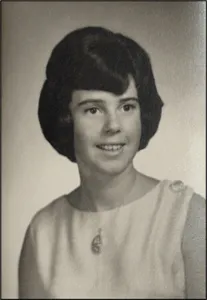
I was lucky enough to have spent a wonderful year in a small town in northern Wisconsin. I arrived in July to humid, hot weather and mosquitoes – which adored fresh New Zealand blood. My host mother wouldn’t let me out of the house without being covered in repellent.
I seemed to fit into the family straightaway. There were three siblings, all younger than me. The older two became great company. My host mother introduced me to some of the students she knew would be in my class, and five of them became best friends. There was also an AFS club at our High School and that proved to be a great help with general school information.
What did I learn from my year in small town mid-west USA?
I learnt not to lick icicles, not to touch metal door handles in winter with bare hands, to ski on small slopes, and ice skate on frozen lakes. I learnt about a continental climate, hot summer/freezing winter. Most of all I found out a lot about myself. Also how to adapt to different family rules and norms and to appreciate the various cultures of other students hosted in the wider area.
The people in small town Wisconsin were kind and generous, but very insular. Most had no idea where New Zealand was; in fact, my Host Parents had half expected me to have grown up wearing grass skirts.
There was not much interest in world affairs or foreign policy. Somehow, I don’t think this has changed much in the intervening 55 years. The Inangahua earthquake and the Wahine disaster happened while I was away. I recall an adult asking me towards the end of my year if I wanted to go home. Of course, I said “yes” and they replied: “but what are you going home to?”
At school, I took different classes; American history, Economics, Earth Science, and Phys Ed.
In 1967/68 girls at my high school didn’t play sport, unless you counted Cheerleading. Basketball, American football, and Wrestling, were definitely spectator sports for girls. I had grown up playing Netball each Saturday in winter.
When I returned to New Zealand, I graduated from Otago University with a BA in Geography and then taught at Nayland College near Nelson.
However, the urge to travel was strong, and I spent nearly three years travelling through Asia, across Russia, Europe, and the UK. That was in 1976 and the following years, and I don’t think the travel bug has left me yet.
AFS Volunteering
I was active in the Nelson AFS Chapter at Otago University, and later in Nelson. My husband and I hosted our first student in 1981 when our first daughter was just three months old, and we continued to host until 2009. A total of nine students, both long and short term. No major hassles with any of the hosted students, and John and I think that the contribution to family and student life was reciprocal: we all benefited; and all three of our children have decided to travel a bit before settling down back in New Zealand. I have been Treasurer, President, and Selection Coordinator in our local Chapter.
In 2000/01 our second daughter went to Hungary with AFS for the year; and I think that she has caught something of my travel bug
My host parents and older sister have visited New Zealand, as well as a group of friends. John and I have been back to several class reunions: but that was mainly in the 80s and 90s. Other trips to Wisconsin have been more to visit friends with whom I have kept in touch, Host family members, and a student we had in 2005 from Minnesota. My Host parents and younger sister have since died.
Husband John and I have attended student’s weddings in Switzerland and Brazil, and visited our students in Thailand, Spain, Switzerland, Minnesota, and Brazil. We also visited our daughter Becky’s family in Hungary.
Over the last 20 years John and I have travelled a lot: including yearly trips to visit our daughter and her growing family in Denmark during their eight year stay there.
I taught secondary school geography for a few years, was the main carer for our three children, owned an embroidery shop, and fully supported my husband in his work as a lawyer.
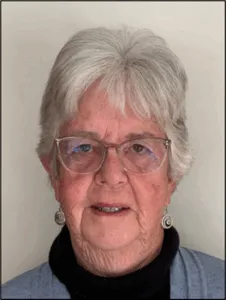
55 years later, I’m still in touch with my host sister, and brother, and 5 or 6 friends.
I haven’t done anything outwardly notable or spectacular since returning to New Zealand; but I am sure that my year in Wisconsin saw me develop much as an individual.
Ginny Radford (USA 1968-69)
(As a result of her outstanding volunteer service, in 1997 Ginny was presented with a ‘Queen’s Service Order’ for her service to Girl Guiding, and in 2015 she added to this with the ‘Companion of New Zealand Order of Merit’ in the New Year’s Honours. She was awarded Life membership of AFS NZ in 2023 and is also a Life Members of Girl Guiding NZ.)
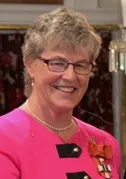
My year in Minnesota was one of contrasts and new experiences. From a small girls’ school to a large co-ed senior high; from Wellington’s relatively even climate to three months of snow and burning summers. I loved the contrasts, and enjoyed different subjects at school: American history, drama, and typing (a great lead-in to years of keyboard use!).
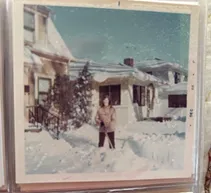
My host family introduced me to canoe trips, cross country skiing, a Nixon political rally. My host father took me into the curtained voting booth to share the way in which votes were indicated by positioning levers, and then the total set were recorded mechanically.
Our year-end bus trip took us through further states, hosted briefly by very different families, including some with photos of sons lost in the unpopular Vietnam war. Those bus trips ended together in Washington DC with a gathering to hear Arthur Howe Jr, the AFS President. (Arthur succeeded the long-time Director/President Stephen Galatti, who died in 1964.)
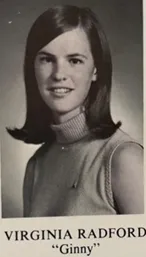
In addition, the NZers were invited to the NZ Embassy, and watched the first moon landing there, with live pictures on a shaky TV! A further special memory was returning to my school 50 years on from graduation and rekindling the link with my host sister when we were both in our 70s.
On return from my AFS experience, I was involved in my Chapters with Selection for several years. Volunteering became integral to my life not just with AFS but also in Guiding both here in NZ and Internationally. In the 90s I had the privilege, as a volunteer, to lead the World Association of Girl Guides and Girl Scouts and I was nominated in 2007 by AFS NZ for the International Board of Trustees and after election I served as a Board Member and as Vice President until 2014.
Two of the things that I credit that exchange year with, are:
• the courage to make new starts, particularly leaving the teaching profession after 10 years, to be a student again and gain an MBA, and then enter the business world; and
• the ability to follow my passion about the impact volunteers can have, giving back to my community as an AFS volunteer, a leader of a global organisation of 10 million, and more recently as a Justice of the Peace and a trainer.
68-69 was certainly a pivotal year!
Author’s Notes:
Ginny stated: “It was when I returned to the US for the 50th anniversary of my class graduation that I realised what a life-long direction AFS had given me: refreshing 50-year-old friendships so easily! I decided then that it was the time to pay back in a different way again – through sponsorship to ensure today’s students get to experience what I did.”
Several fortunate students have received scholarships provided by Ginny since then and AFS NZ and the participants are extremely grateful for her generosity.
Nigel Roberts (USA 1962-63)
(Nigel is an Emeritus Professor of Political Science. He was made an Officer of the New Zealand Order of Merit (ONZM) in the 2010 Queen’s Birthday Honours List.)
I’ve said it before and I’ll say it again: AFS was liberation for me. I went from apartheid South Africa in the early 1960s to the United States. I went from a whites-only, boys-only, private boarding school in Johannesburg to a mixed-race, boys’ and girls’ public high school in Ohio. I had two host families: the first were Democrats, the second were Republicans. Both families were exceptionally kind and helpful. I saw President John F. Kennedy in person twice – once at a campaign rally; the second time at the White House. I also watched him live on television when he gave his October 1962 Cuba missile crisis speech and his June 1963 civil rights address. It’s no accident that I went on to become a political science professor!
It’s now more than six decades since my AFS year ended. A simple measure of the impact that it had on me is the fact that I am still in touch with (and fairly frequently see) members of my first host family (all the second are sadly no longer alive), Ohio high school friends, and fellow AFSers from around the world.
For me, AFS has genuinely been a case of “Walk together; talk together.”
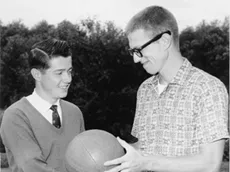
An August 1962 newspaper photograph of Kurt Liske (right) telling Nigel Roberts – newly arrived in Ohio as an AFS student from South Africa – about the rules of basketball (which was then a totally foreign sport to me). Kurt was one of four children in Nigel’s first AFS host family.
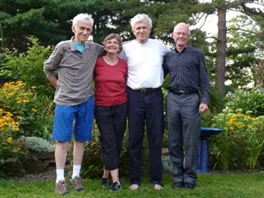
I am still in touch with (and, when possible, visit) the Liske family, who were my first host family and still live in Ohio. In this photograph taken 51 years after the picture of Kurt telling Nigel about basketball, Nigel’s on the right standing beside Kurt, Kurt’s wife Margy, and Karl, the oldest of the four Liske children that Nigel lived with during the second half of 1962.
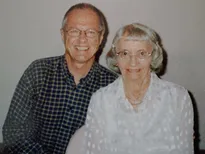
After I left the USA, I also kept in touch with my second AFS host family. This photograph of Janice Meeker, my host mother and I was taken when I visited her in a retirement village in Florida in 2003: Janice was 90 years old at the time.
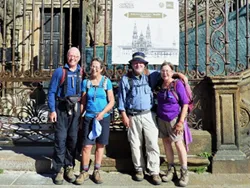
Peggy Wall was a senior in the Ohio high school that I attended. My family and I have often visited Peggy and her family in the US, and she and her family have visited New Zealand several times. Our two families are keen long-distance trampers: this picture of my wife Heather and I (on the left) was taken with Peggy and her husband at the Cathedral in Santiago de Compostela, Spain, in 2017, after they’d completed a 13-day, 244-km walk from Porto, the second-largest city in Portugal.
Tony Hartevelt (USA 1965-66)
In August 1965 I left New Zealand for a year in Western Pennsylvania, USA. I was not conscious of it at the time but my participation in the program was momentous for my parents who, with two small children, had emigrated to New Zealand from the war ravaged Netherlands in 1952, not a lot more than a decade earlier. To them, my selection for AFS was a massive milestone in their quest to find a better future.
Although my selection as an AFS winter program student from New Zealand to the USA was a huge deal in our family in 1965, just how big of a deal it was for my parents did not really dawn on me until many years later when my wife and I farewelled our own first-born child from Wellington at the start of her journey to begin an AFS year in Belgium.
My childhood in New Zealand in the 1950s and early 1960s had been about as different from that of my parents as it was possible to be. There was no better place on planet earth in which to grow up than Mount Maunganui, New Zealand. Then, arriving in the United States, my eyes were opened – wide.
Welcomed and accepted by a warm, generous, and open hearted family and a wealthy, successful community, I became immersed in, and changed by, commerce, politics, education, history and cultural experiences that were all new, different and influential. Everything was different. My life became a steep and occasionally bumpy learning curve.
In September of 1966 I returned home with a clear goal to get an accounting and economics qualification and make a career in commerce. I returned home with an interest in geopolitics and a strong appreciation of home and family. In short, I had grown up.
Over the years since that life changing experience our family has also had the great good fortune of having an AFS daughter, Barbara from Brazil, with whom we are in regular contact to this day. Over the years Barbara has returned to New Zealand to be at her AFS elder brother’s wedding, and we travelled to Brazil to attend her wedding.
My own AFS family we visited in Pennsylvania a number of times, to introduce my wife Jane, and then in later years our children. Time does not stand still for any of us however and inevitably almost all of the family have passed on. That includes the sad and premature death of my AFS brother Jim.
I guess, at the age of 78, I am fortunate to be able to look back and appreciate how lucky I have been.
Footnote: Since completing this note I have received an invitation to attend the 60th reunion of the class of ’66 of my US High School, to take place in August. My wife is encouraging me to accept.