
Eligibility Requirements
- Age: You must be between 14.10 and 17.9 years old
- Language: Beginner – intermediate French (French A1)
- School Enrolment Status: Enrolled students and graduates are eligible
- Vaccinations: DTP (diphtheria, tetanus, poliomyelitis) required for school enrolment
Notes
- Your french 2026 short programme brochures: Experience winter and Christmas in France for 2 months, by living with a host family, discovering the local french way and attending a local school.
- The Schengen 90 day visa is applicable for the intensive programme. All other France programmes require an interview in Wellington for Visas.
What's included in your experience
- Airfare
- Airport Pick-up
- Host Family Placement
- Housing
- Meals
- School Placement
- Individual Contact Person
- Medical Insurance
- 24/7 Emergency Support
- School Transport
- Assistance with Application Process
- Visa Application Assistance
- Pre-Departure Orientation
- Orientations during your time abroad
- Continuous Support
- Worldwide Presence
- 70 Years Experience
What you are responsible for
- Vaccinations
- Cultural Tours
- Visa and Passport Fees
- Stipend
- School Uniform
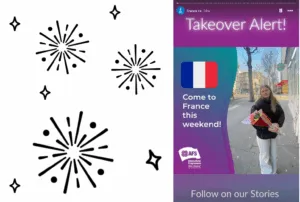
Instagram Takeover
Check out our Instagram Highlights to see Caitlyn’s everyday life in France. She has answered heaps of questions and shared lots of photos 🎥
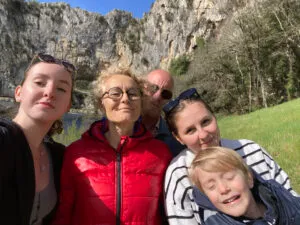
Host Family
It is essential that everyone participates with chores at home, from helping with cooking to doing laundry. It is also important to follow any family rules. Many host families will be in small towns where public transport can be limited, so it is important to check with the family when you need to make plans for transportation. Family is very important in France, and you may find yourself living next to the grandparents, and having a big family lunch every Sunday.
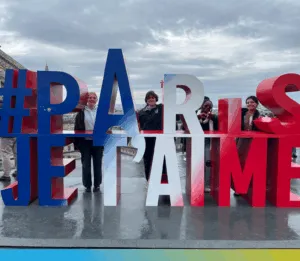
Language
The main language in France is French, and your stay will be easier if you already know some French. Many parents in France do not speak any English or very basic. However, you will discover that learning a language is obligatory in school. You will have English classes and a second one to choose (the main ones are Italian, Spanish and German). You can find some regional languages in France such as Ch’ti, Basque and Breton, but they are not really used nowadays. However you will find there are different ways of speaking French in each region, and some accents can be very difficult to understand in the beginning.
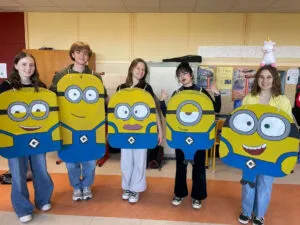
School
The majority of French schools are public and secular (so you can’t wear overtly religious symbols to school), but you the rules are different for private schools. The school year starts in September and ends in June the following year, with usually 6 weeks of school and 2 weeks of holiday. A typical day of school in France can be long when you are not used to it. The school day begins at 8 am and ends between 5 and 6 pm, but don’t worry, you get one or two hours of break for lunch and some other breaks of 10 to 20 minutes during the day. Wednesday is usually a half day. Education varies a lot in France. Generally, everyone has common courses in History, Geography, French, other languages (English and a second one), sport, Civics and Science. Then, if you are in Première or Terminal you can choose three or two other subjects of your choice. The most common options are Arts, History–Geography and Political Science, Humanity–Literature and Philosophy, Mathematics, Biology, Chemistry, Informatic, and Economics.
Food
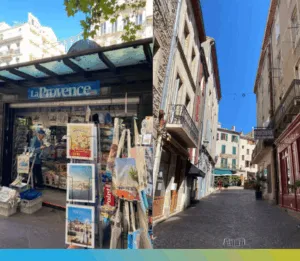
France is known all over the world for its food, both savoury dishes or sweet. There are a number of traditional foods that are well known, such as cheese and pastries, depending on which part of the country you are in. Don’t worry … even if you have heard that they eat snails, frogs’ legs and rabbit in France, it is not really very common. However, if you are a little bit adventurous it is a very good experience to try. French cuisine is very good. The French love to eat and mealtimes are very important. Dinner is the most important meal during the week because everyone can be together after work, but during the weekend, lunch may be the main meal of the day. Extended family meals for a special event may start at 12pm and not finish till 5pm, with multiple courses served, eg, an appetizer, entrée, main, salad, cheese, dessert. It is rare to find a vegetarian family in France, even more so for a vegan, and gluten is common in most households as French bread is much-loved!
People & Culture
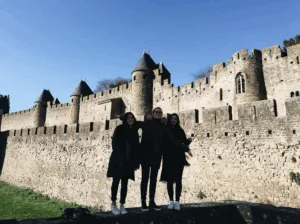
Even if on first meeting they may appear rude and love to complain about everything, French people are very welcoming and like to discover new cultures. They are very happy to be French and love to share their own culture, which is rich and varied, with a way of life and traditions that comprise gastronomy, the arts, fashion, literature, architecture and history. France is an ancient country, where you can still find Roman antiquity, medieval castles, French renaissance buildings and more. There is much to surprise you, from the big cities to the smallest towns, and picturesque landscapes.

Alumni Story
A Kiwi in France: Tui’s 5-Month Exchange Update
Dive into Tui’s journey of school, skiing, and language mishaps in France! From improving her French to embracing the challenges of a new culture, she shares the highs, the struggles, and the excitement of being halfway through her 10-month exchange.
Ready to Start your French Adventure?
Let AFS guide your intercultural adventure
With over 75 years of experience in student exchanges, we know what we’re doing when it comes to support and education! AFS provides comprehensive orientation for all students and families before, during and after your exchange – AFS volunteers and staff will be there to support and guide you the whole way through. In-person orientation camps in New Zealand and your host country are supplemented by our world-leading online Student Learning Journey, an interactive course that brings AFSers from around the world together to develop essential global skills, learn intercultural communication techniques, and practice social impact.