
Eligibility Requirements
- Age: You must be between 15.6 and 18 years old
15 and 17.11 for short programmes - School Enrolment Status: Enrolled students and graduates are eligible
- Language Requirement: Danish lessons on arrival, prior learning recommended
- Other: Faroe Islands in Greenland are a possible placement
What's included in your experience
- Airfare
- Airport Pick-up
- Host Family Placement
- Housing
- Meals
- School Placement
- Individual Contact Person
- Medical Insurance
- 24/7 Emergency Support
- School Transport
- Assistance with Application Process
- Visa Application Assistance
- Pre-Departure Orientation
- Orientations during your time abroad
- Continuous Support
- Worldwide Presence
- 70 Years Experience
What you are responsible for
- Vaccinations
- Cultural Tours
- Visa and Passport Fees
- Stipend
- School Uniform
People & Culture
Denmark is one of the happiest countries in the world, you will see that Danish people are very friendly and welcoming. The Danes are known for being cosmopolitan, well-educated, and open-minded people. Equality is a key word in Danish culture. The vast majority of people belong to the middle class, and the percentage of poor people is low. The idea that everyone should have equal opportunities is reflected in the healthcare system as well as in the educational system, among other things. In Danish culture, people follow the concept of hygge (creating a warm atmosphere and enjoying the good things in life with good people) – they value their personal space and love to be cosy and comfortable.
Language
Danish is the main language spoken but Faroese, Greenlandic and German are also recognised as official languages. As you can see from the name of the language, if you are in the Faroe Islands you will find more Faroese language and if you are in Greenland you will hear more Greenlandic. However, as English is widely taught in Denmark, a large part of the population speaks very good English.
Host Family
Families in Denmark are close and most prefer to cook dinner at home together every night. Key values in a typical Danish family include punctuality, planning and responsibility. They often trust and share their daily lives with each other. It is common for all family members to attend sports clubs or other local activities after work and school. Typically, both parents in a Danish family work full-time and are away from home during the day. They are quite involved in their children’s school lives and activities. Each family member contributes to household chores and is treated equally. Parents, teachers and elders are usually referred to by their first name.
School
A typical school day in Denmark starts at 8 am and finishes at 3pm, with extra school activity after courses. You will need to quite independent because Danish students tend to be more mature than young people the same age in most other countries. A key phrase in Denmark is “freedom with responsibility” so any student who cannot respect this freedom may have trouble at a Danish school.
Food
Danish food is diverse and has a wide variety of fresh produce, grains, and meats. Other staples are roast pork, pickled herring, fish, beans, Brussels sprouts, rice pudding, potato soup, meatballs in curry sauce, salted black licorice, and pastries.
Danish lunch is traditionally an open sandwich called smørrebrød. Dinner is usually the main meal and typically a time for the whole family to gather and talk about their days. Occasionally, Danish families will go out to eat at a restaurant, but this is a rare treat.
Alumni Stories
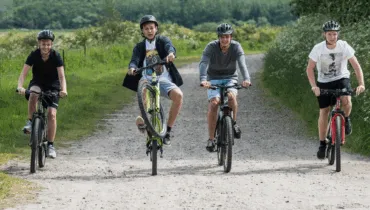
Lucas' Time at a Uniquely Danish Efterskole (Boarding School)
A Danish Efterskole is a school like no other!
Danes say that one Efterskole year is equal to 7 regular years, because you grow so much as a person. AFS NZ Returnee Lucas says that even one month was a life-changing experience.

Exploring Denmark: Summer's Experience
Experience life in Denmark through the eyes of an AFS alumni. From navigating Danish traditions to personal development, discover how their exchange programme helped them grow and embrace the Scandinavian way of life.
Ready to Start your Danish Adventure?
Peace Camp Info
The PEACE Programme or PEACE through Exchange and Active Citizenship Education is a secondary school trimester programme which aims at empowering and enabling young people to become active citizens. The participants stay with host-families and go to high school in a European country. At the end of the programme, all participants of the PEACE programme come to Belgium for a five day long camp with a focus on Active Global Citizenship in Europe.
Let AFS guide your intercultural adventure
With over 75 years of experience in student exchanges, we know what we’re doing when it comes to support and education! AFS provides comprehensive orientation for all students and families before, during and after your exchange – AFS volunteers and staff will be there to support and guide you the whole way through. In-person orientation camps in New Zealand and your host country are supplemented by our world-leading online Student Learning Journey, an interactive course that brings AFSers from around the world together to develop essential global skills, learn intercultural communication techniques, and practice social impact.