

Two Returnees from the 1960s share their perspectives on how AFS shaped their paths, and why our mission is still as relevant today as it was then.
David Caygill (USA 66-67)
(Member of Parliament 1978-1996, which included being Minister of Finance, Minister of Health, Minister of Trade and Industry. David began his political career soon after his return from AFS, when he was elected for the Christchurch City Council at the age of 22.)
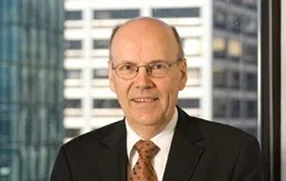
My AFS Experience – USA
Living as part of an American family in the Mid-West, in the mid-1960s, was for me a formative experience. It broadened my horizons, to the extent that I returned home a proud Kiwi, but one who has ever after seen New Zealand as a small part of a large world.
My American high school gave me a life-long interest in Economics, a subject not then taught at Christchurch Boys’ High School. Co-education was also a welcome novelty. But most obviously my year in Kenosha, Wisconsin unlocked a latent interest in politics, the path I was to follow for a working lifetime.
1966 was an off-year in American politics: a year when the House of Representatives and a third of the Senate were up for re-election. I recall watching with fascination as the results came in. An unknown Republican, Spiro Agnew, unexpectedly won the Governorship of Maryland. (Two years later his timely endorsement of Richard Nixon led to his becoming Vice-President, before his ultimate resignation in disgrace). At some point on election night, I realised that my enthusiasm for Walter Cronkite’s coverage exceeded that of my American family. They headed to bed, whilst I stayed on for several more hours.
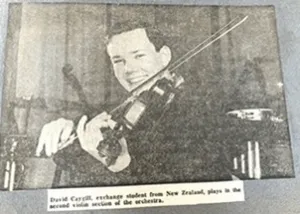
Sixty years later this wonderful family are still intertwined with mine. My American Mom and Dad both visited NZ. Their children have met with ours. Only today I spoke to my American brother’s daughter on the telephone. They are more than lifelong friends, they are part of our family. As AFS was created to achieve, we share the love and understanding that families bring and nations need.
Margaret Evans (USA 62-63)
(CBE 1995 for services to local government, JP, MSocSc (1st class Hons), Mayor of Hamilton (1989-98), International Cities for Sustainability (ICLEI) Asia-Pacific representative (1997-2000), and Commonwealth Human Ecology Foundation trustee (current). Serial traveller.)
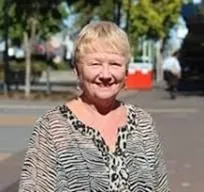
The Overseas Experience
With the world currently trembling from geo-political tensions and oil supply disruptions, it is essential we Kiwis enhance our ability to ‘think globally’.
Since then, I have travelled extensively to so many of the world hot spots, centres of human history, and Nature’s gems. Which explains my perspective now.
This tiny island nation (about the size of Sydney) needs our young people to be ‘worldly’. To stand and be in a different place, away from home, to feel what it is to be global as well as local, even though that may seem too challenging at times, and even right now.
The OE as a ‘must do’ tracks back to ancient times, for warriors and adventurers but mostly elite young men exploring the wider world geographically, socially and culturally. In the 19th century the term was the ‘grande tour’ – usually before returning home to ‘settle down’.
In the 20th century, 100,000 Kiwis had their OEs in WW1 battlegrounds, another 140,000 in WW2. And it was out of these wartime experiences that AFS transformed in 1946 from an ambulance service providing humanitarian aid into the high school student exchange programme. This was led by US ambulance driver Stephen Galatti with the vision of young people ‘walking and talking together’ to foster peace and understanding.
We post-war Kiwi ‘boomers’ commonly talked of exploring offshore, and half of us did, mostly returning home after a year or two. Today, almost 30% were born elsewhere, but OE refresher courses are still useful, as well as for the stay-at-home locals – to develop and sustain that essential worldliness. A post high school ‘Gap Year’ is also becoming popular and is expansionary too.
In 1962-63 I was with 29 teenage New Zealanders among 2500 ‘AFSers’ from 56 countries who spent a year as senior high school students in the US. My parents and my school gave me the courage to step up and out.
My Texas town was 40% bi-lingual ‘Tex-Mex’ and although we all mixed at school I was told I couldn’t date a Chicano boy. On a Mississippi riverboat I encountered a wire fence to keep the races apart. I met President John Kennedy at the White House just weeks before he was assassinated. The Civil Rights Act was signed in 1964 (desegregating schools and prohibiting discrimination in public places and employment), then in 1965 the Voting Rights Act (aimed at assisting African American to vote at state and local levels).
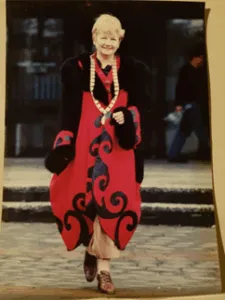
I respect the US Constitution’s evolution over time, and note those 1865-1870 post-Civil War Amendments to abolish slavery and grant equal protection (the 13th, 14th, and 15th) coincided with 19th century British settlement in the Waikato, our military conflict, and the birth of Hamilton where I was elected the first female mayor in 1989 – 124 years later.
That AFS year made me more resilient, and even more curious, stoking my passion to understand the ‘who’, ‘what’, and ‘why’ of everything. This opened my mind to a career in journalism and local politics, and travels almost everywhere. And more extraordinary people to encounter, hospitality and knowledge-sharing.
I still consider myself an ‘almost American’ although puzzled by contemporary politics. And I remain convinced that we should do all we can to assist young people to see the world. Even in these unsettled times, AFS offers remarkable opportunities, with exchanges to and from almost 100 countries.
PS: Both my son and daughter had OEs, my 16-year-old grand-daughter had an exchange trip to Japan last year, and my nephew was an AFSer to the Philippines.
We thank David and Margaret, who wrote these articles for the AFS New Zealand newsletter in March 2026.