

Written by Rachel Lilburn:
The world has changed a lot since the first AFS student exchanges in 1947.
It’s changed a lot since I spent a year in Sucre, Bolivia, in 1994.
The internet and technology have dramatically changed how we connect and communicate; how we learn and how we share our knowledge.
But despite all the changes, I believe the fundamental experience of being an exchange student remains the same.
At its heart, being an exchange student is about discovering who we are. It’s about shaping our identity, forming our own views about the world and understanding our own culture by being immersed in another.
For those of us fortunate to have travelled overseas as an adult, we get a first-hand view into ways of life that are often very different from our own. Sometimes I think of this as a view through a window. We’re seeing the culture, but we’re experiencing it from the outside. We’re eating in restaurants. We’re going back to our hotels or hostels at night. We’re speaking our native language with our travel companions. Our interaction with locals is in shops and tourist attractions.
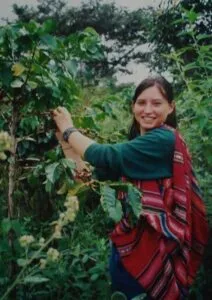
As an exchange student, you’re no longer looking through that window. You’re opening the door and going inside.
You live with a family. You go to school. You have to learn how to be uncomfortable, to get used to ambiguity. You need to adapt to house rules that are often unspoken and not always explained. Do we take shoes off indoors? Who does the laundry? Is offering to cook polite or rude?
In Bolivia, kissing everyone on the cheek felt like an invasion of personal space at first. It was awkward, and I was always unsure if I was doing it right.
I handwashed my clothes, outside, in cold water, for the year. It made me very grateful for washing machines!
We don’t know how accepting of difference we are, until suddenly the way we do things is not the way everyone else does it. Until what we believe is the opposite to what everyone around us believes.
We have some difficult questions for ourselves:
Is this something I do because I think it’s right – or have I just never questioned it?
Is it just something I’ve always done, because everyone around me did it?
Something I often hear from returnees (no matter which country they’ve gone to) is:
“I learned so much about myself and New Zealand”
Most of us expect to learn about the host country. Fewer expect to learn so much about our own.
Obviously, as an exchange student, you are asked a lot about New Zealand, which forces you to think about our country as a foreigner might.
Living in another culture, you start to see your own in contrast, which can show you that which might have been invisible to you before. Think of the philosophical concept of duality: you only understand ‘day’ because you’ve experienced ‘night’.
David Foster Wallace said “There are these two young fish swimming along and they happen to meet an older fish swimming the other way, who nods at them and says “Morning, boys. How’s the water?” And the two young fish swim on for a bit, and then eventually one of them looks over at the other and goes “What the hell is water?”
That’s culture. You only see it when you step out of it.

As exchange students we learn about the unspoken, unwritten rules that form a culture by being outside of our own culture.
Culture shows itself in many small, everyday ways.
It can be seen in how we greet each other — a handshake, a bow, a hongi, or a kiss on the cheek.
It’s in what we think of as healthy or unhealthy — how much sleep we need, the food we eat and when we eat it.
It shapes how we communicate — whether silence is comfortable or not, whether it is polite to be direct or better to be indirect, how much personal space we expect, and how emotions are expressed or kept private.
Culture also influences how we think about time. For some, being “on time” means being early. For others, it means being there eventually. Some cultures prefer strict schedules, while others are more flexible and move with the flow of events.
It is also in our ideas of respect and fairness. Who makes decisions in a household? How are elders treated? What is considered polite or rude?
Even what we call “common sense” is shaped by culture. Rituals, stories, and unspoken rules guide how we behave, often without us noticing – until we step into another culture and realise not everyone does things the way we do.
I was a Kiwi kid who spent much of my childhood barefoot, and suddenly in a culture where people believed I would get sick if I didn’t have shoes on at all times. I was eating the main meal of the day at lunchtime, and soft drinks were on the table at every meal.
We discover that some things we’ve been taught as ‘facts’ are not, in fact, taught the same way across the world – did you know the number of continents in the world depends on the educational system you’ve come through? In New Zealand, we’re taught there are seven continents – but in many parts of the world, students are taught there are six continents, and in some places, five would be the correct answer.
Spending a year living with a Bolivian family was a transformative experience for me. I came back to New Zealand with an understanding that there were many different ways to do things, and that the ‘right’ way was dictated by the culture you grew up in.
30+ years on, I can still say it was a life changing year that has shaped how I view the world.
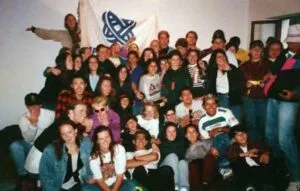
Rachel is an AFS Returnee (NZ to Bolivia). Her AFS experience sparked a lifelong love of travel and exploring other cultures. She has lived in London and Chile and now resides in the Waikato with her two sons.